How Alexa Detects Environmental Changes: Sensors Explained
Smart home assistants have evolved from simple voice-activated devices to intelligent hubs capable of sensing, interpreting, and responding to environmental changes. Amazon Alexa, in particular, has transformed the landscape with its advanced sensing technologies. This article explores how Alexa detects environmental changes, the sensors it uses, and best practices for leveraging these capabilities in your smart home.
The Evolution of Alexa’s Environmental Sensing
Since its introduction in 2014, Alexa has rapidly advanced from basic voice recognition to a sophisticated, context-aware AI assistant. Recent hardware releases, notably the Echo Dot Max, Echo Studio, Echo Show 8, and Echo Show 11, have integrated new custom silicon and the revolutionary Omnisense sensor fusion platform, enabling Alexa to go beyond listening and into sensing the entire ambient environment around it[3][5].
What Is Sensor Fusion? Introducing Omnisense
Sensor fusion refers to the combination of data from multiple sensor types to form a comprehensive understanding of the environment. Omnisense, Amazon’s proprietary sensor platform, is at the heart of Alexa’s latest environmental detection capabilities. It brings together data from:
- Cameras (13MP)
- Microphones
- Ultrasonic sensors
- Wi-Fi radar
- Accelerometers
- Wi-Fi Channel State Information (CSI)
This fusion enables Alexa to sense presence, motion, sound, and even subtle changes in the environment, making it highly responsive and proactive[1][3][5].
Key Sensors in Alexa Devices Explained
1. Microphones
Alexa’s always-on, far-field microphone arrays are designed to pick up voice commands from across the room, even in noisy environments. With the latest AZ3 silicon and AI acceleration, Alexa can filter out background noise and detect wake words with over 50% improved accuracy[3][5].
2. Cameras
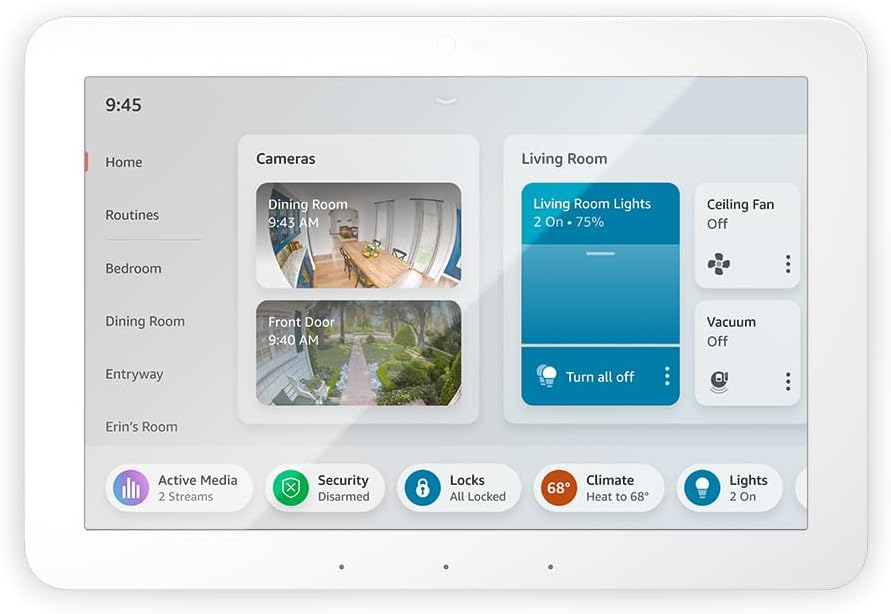
The new Echo Show devices feature a 13-megapixel camera that enables visual recognition, user identification, and even environmental monitoring. This camera can detect presence, recognize specific users, and allow Alexa to adjust routines or provide personalized responses based on who is present[1][3][11].
3. Ultrasonic Sensors
Ultrasonic sensing uses high-frequency sound waves to detect movement and presence in a room. This allows Alexa to recognize when someone enters or leaves, enabling automations like turning lights on or off or sending security alerts[1][3].
4. Wi-Fi Radar and CSI
Alexa leverages Wi-Fi radar—analyzing disturbances in Wi-Fi signals—to detect motion and presence without relying solely on cameras or microphones. Wi-Fi Channel State Information (CSI) provides detailed data about how signals bounce off objects and people, further enhancing Alexa’s ability to sense environmental changes[1][3].
5. Accelerometers
Integrated accelerometers help Alexa detect physical changes to the device itself, such as movement or vibration, which can trigger alerts or adjust device behavior.
How Alexa Uses Sensor Data to Detect Environmental Changes
With Omnisense, Alexa combines multi-sensor input using advanced AI models. This enables Alexa to:
- Detect presence: Identify when someone enters or leaves a room, even at oblique angles or in low-light conditions[1][3].
- Monitor routines: Learn user habits and detect anomalies, such as a light left on at night, prompting a proactive suggestion or automation[2].
- Enhance security: Recognize unfamiliar presence or activity and send alerts for possible intrusions or forgotten doors/windows[3][5].
- Personalize interactions: Adjust lighting, music, reminders, and routines based on who is present and the context of their actions[3][5].
AI and Machine Learning: The Brains Behind the Sensing
Alexa’s ability to interpret sensor data relies on robust AI and machine learning algorithms. The new AZ3 and AZ3 Pro chips support on-device AI models for rapid processing, enabling real-time decision-making and minimizing cloud dependency for privacy and speed[3][5][9].
Key AI-driven features include:
- Commonsense reasoning: Alexa can infer user intentions from patterns, such as preparing a reminder if a TV is turned on near the end of a scheduled event[2].
- Self-awareness: Alexa maintains ambient state awareness, tracking time of day, device statuses, and user actions to inform proactive assistance[2].
- Self-learning: Alexa adapts to user feedback, learning new commands and preferences over time without manual reprogramming[2].
Best Practices for Using Alexa’s Environmental Sensing Features
To maximize the benefits of Alexa’s environmental sensors:
- Opt in to advanced detection features – Many proactive sensing capabilities require user opt-in for privacy. Review your Alexa app settings to enable desired features.
- Customize routines – Use the Alexa app to set up routines based on presence, time, or sensor triggers for lights, thermostats, and security devices.
- Regularly update device firmware – Stay current with updates to access the latest improvements in AI and sensor performance.
- Position devices optimally – Place Echo devices in locations where their cameras, microphones, and sensors can best monitor the intended space.
- Review privacy settings – Understand and manage data sharing, camera usage, and voice recording options to balance functionality and privacy[4].
Privacy Considerations
With advanced sensing comes greater responsibility. Alexa devices are designed with privacy in mind, offering:
- Physical camera shutters on Echo Show devices
- Microphone and camera off buttons
- Transparent privacy controls in the Alexa app
- Options to review and delete voice recordings and sensor data
Users should regularly review privacy settings and stay informed about how their data is used to maintain control over their smart home experience[4].
Future Directions: The Age of Self-Aware AI
Amazon continues to push the boundaries with Alexa’s environmental awareness. The concept of “age of self”—where AI is self-aware, self-learning, and self-service—points to a future in which Alexa can anticipate and fulfill user needs even more autonomously[2]. Emerging features may include deeper context awareness, more nuanced personalization, and enhanced smart home orchestration without user intervention.
Conclusion
Alexa’s environmental sensing capabilities, powered by Omnisense and advanced AI, set a new standard for smart home intelligence. By understanding how these sensors work and following best practices, users can unlock a safer, more convenient, and more personalized living experience. As Alexa continues to evolve, expect even more intuitive and proactive smart home solutions in the years ahead.